
Does a new roof cost $8,000 or $20,000? Easy, but not so easy to answer.
Here’s the honest truth: this isn’t the easiest question to answer because almost every roof is different. A house built in 1970 has different challenges than one built in 2010. A two-story costs more than a one-story. There are so many variables that a one-size-fits-all price just doesn’t exist.
But we can walk you through the key factors that drive the price up or down — and show you real examples with our actual 2026 numbers.
Where Prices Stand in 2026
The good news: prices have stabilized. The not-so-great news: costs are still significantly higher than pre-COVID levels, and I don’t see that changing anytime soon. I wouldn’t be surprised to see another price increase from manufacturers or shingle distributors this year.
One specific area to watch: drip edge pricing has jumped 50-60% over the last year, largely because of tariffs. Still not a significant cost, but it is a factor when getting a new roof.
The 6 Factors That Affect Your Roof Price
Here are the main variables that will move your price up or down — we’ll cover each one:
- Total size of your roof
- Pitch (steepness)
- Number of shingle layers
- Condition of the Decking
- Materials you choose
- Building code upgrades
1. Total Roof Size
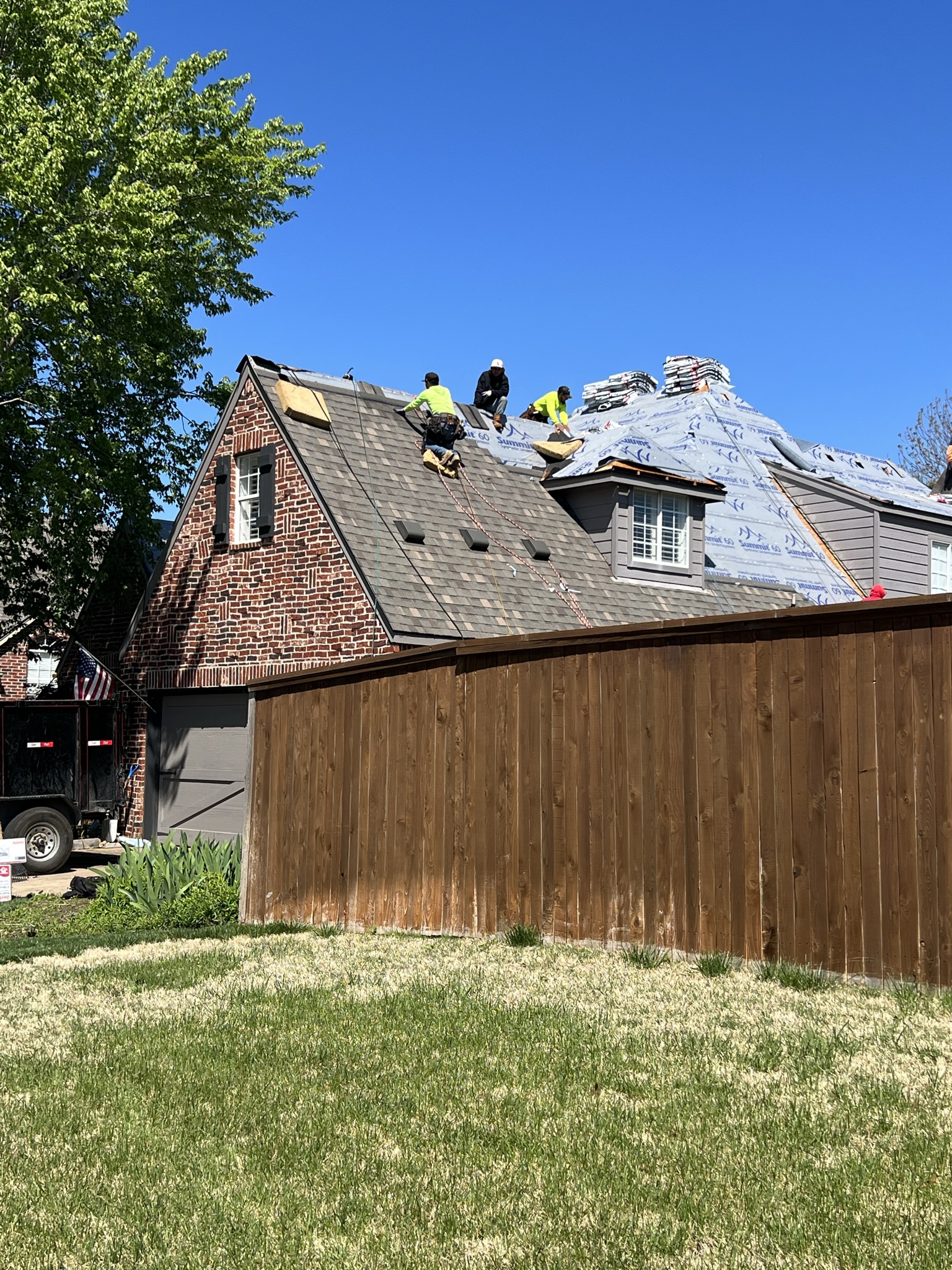
This is the single biggest factor in your roof price. Roof size is measured in squares (1 square = 100 sq ft). Your quote needs to include the total amount of shingle squares but also needs to include ridge cap and starter strip — those are included in the total amount of the roof size.
Example: At $450/square, 6 bundles of ridge cap + 3 bundles of starter = 3 extra squares = $1,350 added to your total. If your estimate doesn’t account for all material types, your price will be off.
Pro Tip: Google Earth is an easy way to get measurements of your roof, and there are many online options to pay for a report such as EagleView or RoofScope.
2. Roof Pitch (Steepness)
Pitch is the second biggest price driver. A standard ranch-style 4/12 pitch is the baseline — the lowest price point. As the pitch increases, so does the price. Steeper roofs are slower and more dangerous to work on.
The same goes in the other direction: very low-pitched roofs including flat roofs also cost more due to the specialized materials and techniques required. Think of it as a U-curve — standard pitch is the sweet spot, and prices rise as you go up or down from there.
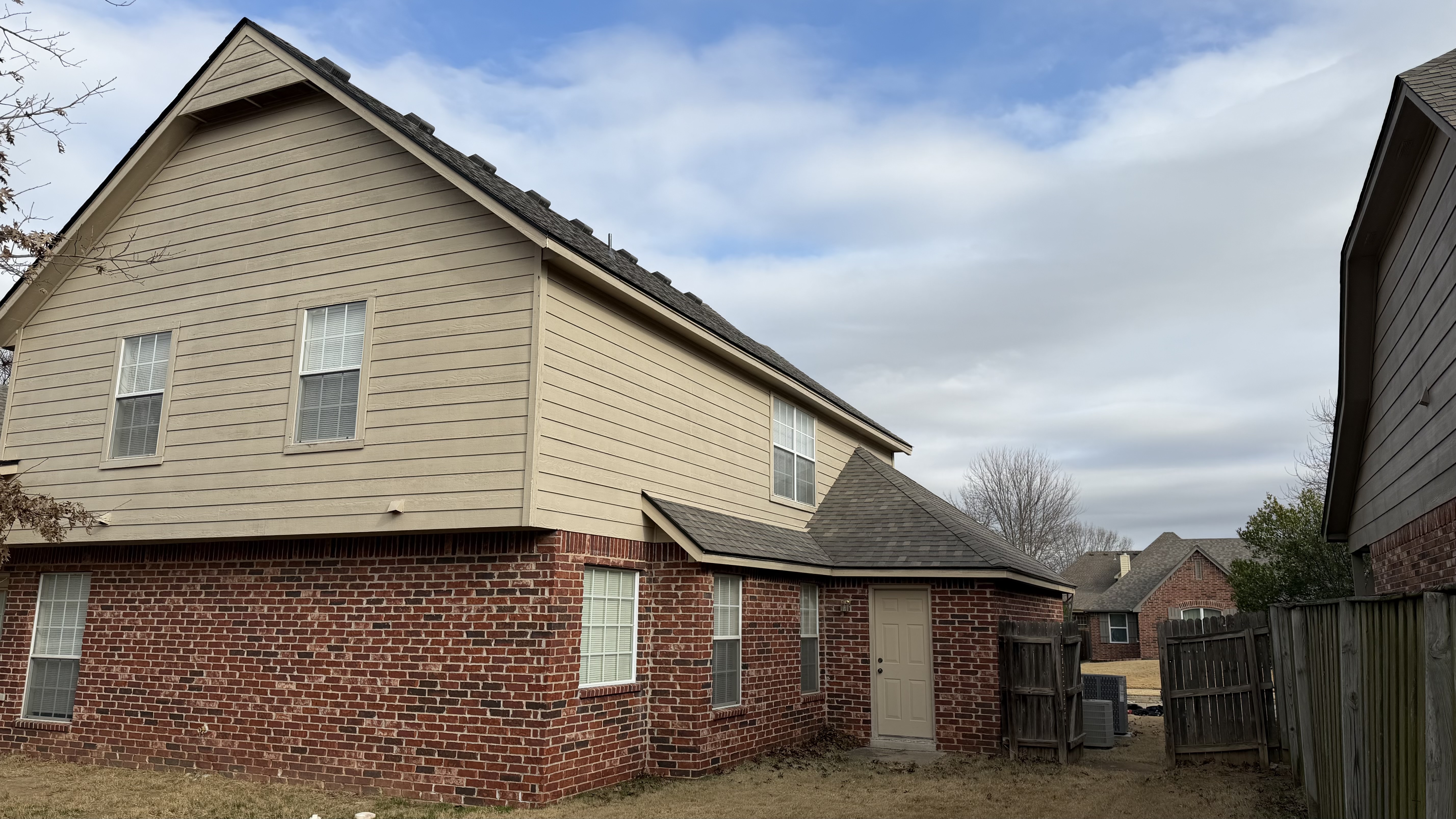
Pro Tip: To find the pitch of your roof, here are a couple of options. You might find a sticker on your roof truss in the attic, or check your original building plans if you have them. There are also many free apps you can download — just place your phone on the roof slope and it will tell you the pitch.
3. Number of Shingle Layers
Does your roof have one layer of shingles, 3 layers, or 14 layers? Haha. The most I’ve ever seen is 4 layers of shingles on top of cedar shake — that was a lot of debris.
One layer of shingles is by far the most common in the Tulsa area. This is normally going to be your base price — the entry point for a new roof. Two layers is a lot of extra work and material, but the price really only increases by a minimal amount. Once you hit 3 layers or more, the price starts to climb significantly for two reasons: labor cost and dump fees. Three or more layers will require several trailer loads of debris to the dump.
That said, if you do have multiple layers:
- 2 layers: minimal price increase — the extra work is modest
- 3+ layers: price climbs significantly due to labor cost and multiple trailer loads of dump fees
Pro Tip: Experienced roofers can spot multiple layers from the ground. As a homeowner, look for uneven shingle patterns or shingles that sit higher than your neighbors’ roofs — groupings of shingles, not just a single shingle sticking up.
4. Decking Condition
Decking is what the shingles are nailed to. That could be plywood or 1-inch board decking.
When it comes to decking, here are your most common situations.
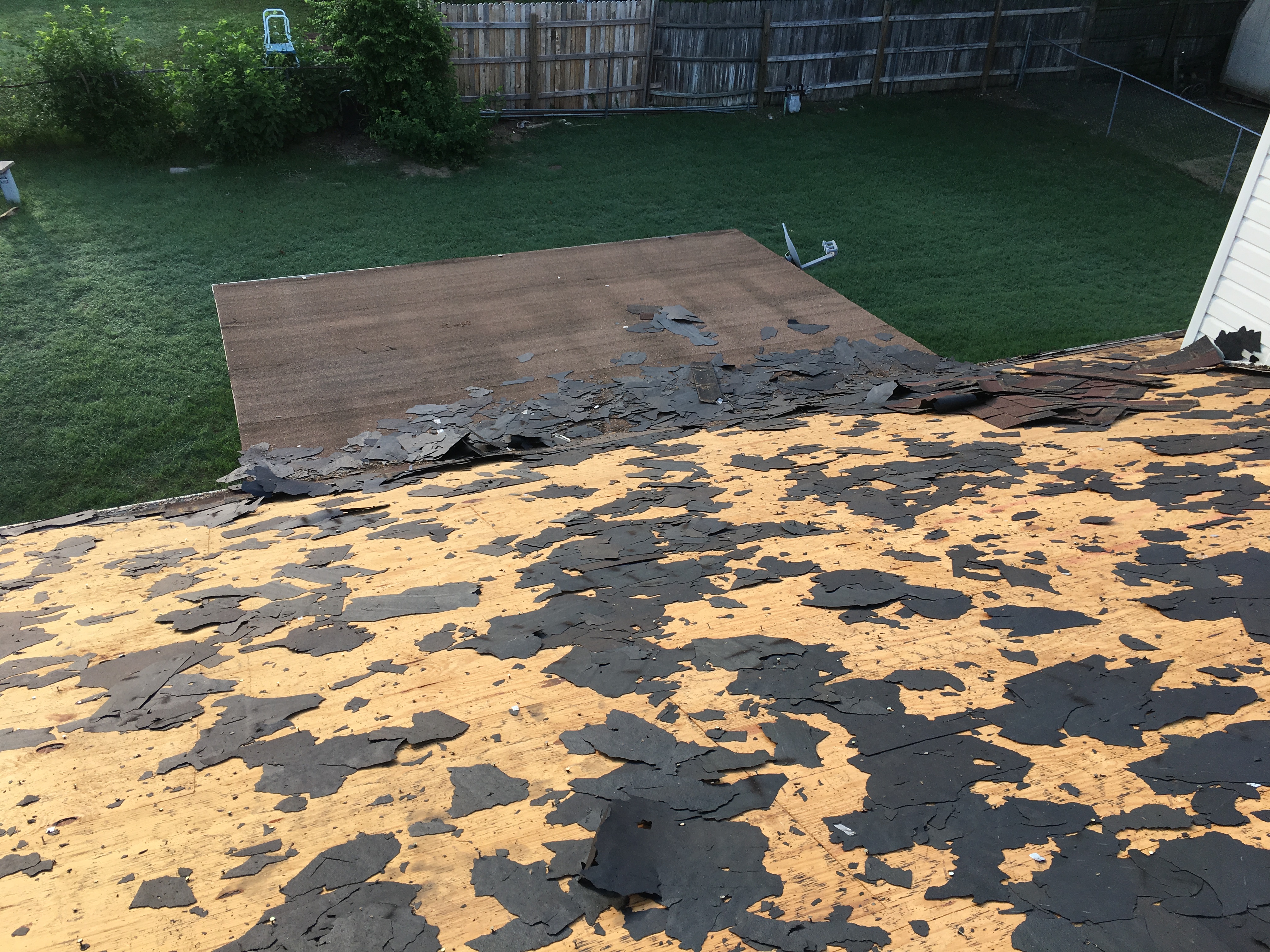
Spot replacement: A few sheets replaced due to a leak or some type of previous install issue. At Green Country Roofing, we don’t charge for plywood until we reach 4 sheets. How roofing companies approach this will vary but pricing can range up to $100 per sheet.
Full re-deck: Older homes sometimes have decking that’s no longer up to code. If this is the case, a re-deck or a lay-over is normally the solution. For a 30-square roof you would need 90 sheets of plywood. Re-decks are normally cheaper per sheet, but multiply that by 90 and it’s still a significant cost — even at a reduced per-sheet rate, that adds up fast.
Pro Tip: Get your attic inspected before any roof quote. Finding decking issues after the fact is one of the most expensive surprises in roofing.
5. Material Choices
Shingle upgrades are the most common material choice to consider. Maybe that includes a Class 3 or Class 4 shingle to guard against hail. Maybe a shingle rated for 150 mph winds. Or maybe something like the Atlas Pinnacle Sun shingle that reflects the sun rays and saves on energy cost.
Generic vs. brand-name materials. The most commonly used generic materials are ice and water shield and synthetic felt paper — brand-name versions cost a little more but offer better protection and longer warranties.
Consider converting your ventilation to ridge vent. Ridge vent is the most efficient exhaust ventilation system available and, honestly, it looks amazing — huge curb appeal win. The conversion does require a few extra steps, like closing off existing gable vents and filling in old box vent holes, but the result is a cleaner roofline and better airflow throughout your attic.
The materials you choose — or don’t choose — will depend on whether you’re planning to move soon or if this is your forever home. Or maybe you’re just tired of shingles blowing off the roof. This is Tulsa — the weather is crazy sometimes.
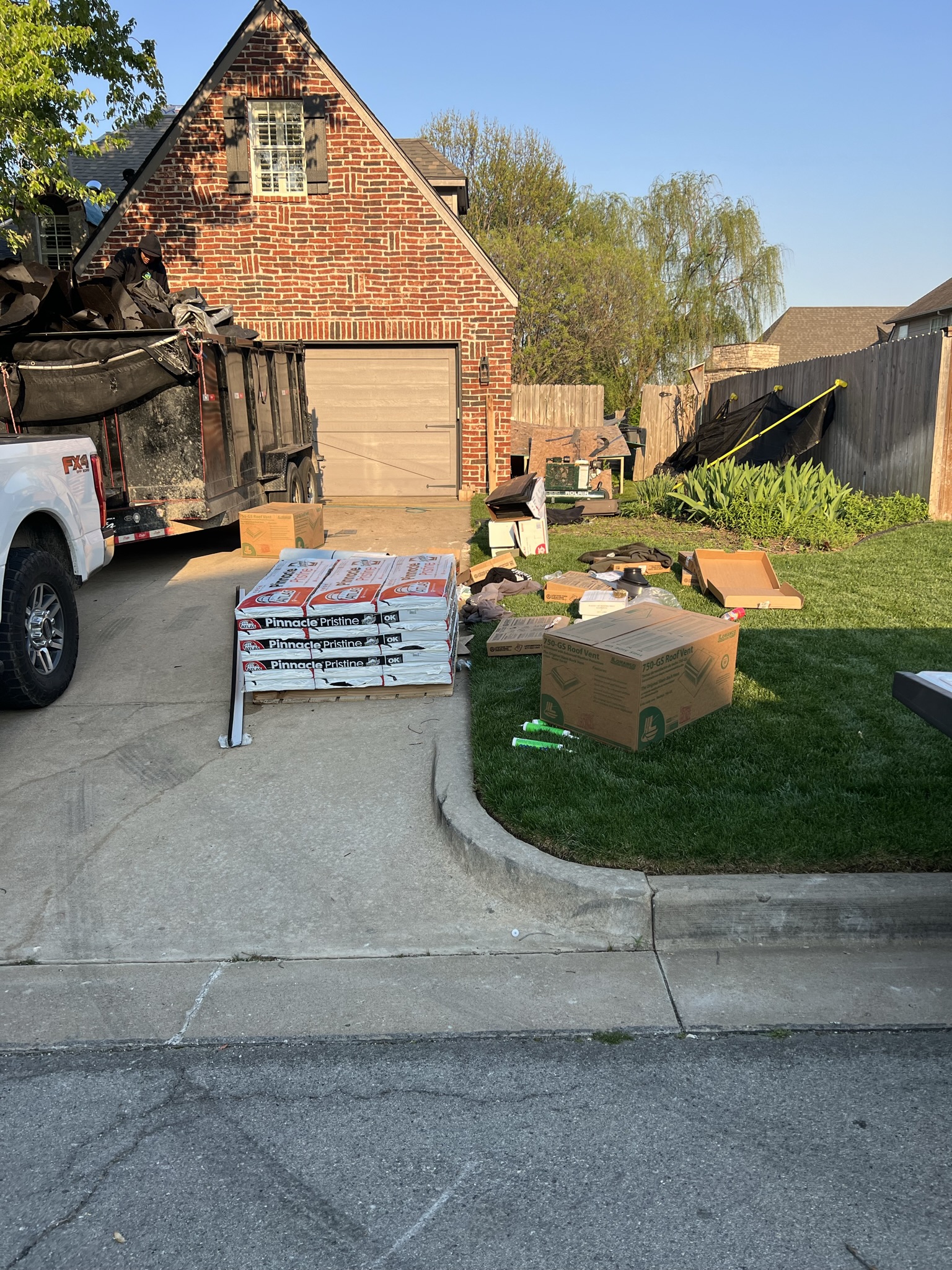
Pro Tip: When reviewing estimates, look for contractors who offer 3 options. If a contractor only gives you one option, you could be missing out on cost-effective upgrades that would better protect your home against Tulsa storms.
6. Building Code Upgrades
The biggest code issue I see in Tulsa is a lack of attic airflow. The solution is adding the proper roof vents and soffit vents — it will add some cost, but it’s necessary. Other common code items include:
- Drip edge installation
- Ice & water shield in valleys
- New chimney or step flashing
Pro Tip: The two biggest problems I see on Tulsa roofs: lack of ventilation and reuse of flashings. When reviewing any estimate, make sure both are addressed.
Real 2026 Pricing — Green Country Roofing
Enough background. Here’s what roofs actually cost using Green Country Roofing current 2026 pricing. I’d say we sit right in the middle of the Tulsa market — there are cheaper companies, and there are more expensive ones.
Every example below includes a Class 3 shingle, no generic materials, and a full Atlas warranty.
House #1 — 40 Squares, Semi-Steep Pitch (8/12)
| HOUSE #1 | ||
| Description | Formula |
Price |
| Roof total size | 40 sq x $410/sq |
$16,400 |
| Pitch surcharge (8/12) | 40 sq x $15.50/sq |
$620 |
| ESTIMATED TOTAL | $17,020 | |
House #2 — 35 Squares, Standard Pitch, Full Re-Deck + 2 Chimneys
| HOUSE #2 | ||
| Description | Formula |
Price |
| Roof total size (4/12 pitch) | 35 sq x $410/sq |
$14,350 |
| Full re-deck | 105 sheets x $50/sheet |
$5,250 |
| Chimney reflash | 2 chimneys x $523 each |
$1,046 |
| ESTIMATED TOTAL | $20,646 | |
House #3 — 25 Squares, Very Steep (12/12) + Flat Section + Class 4 Upgrade
| HOUSE #3 | ||
| Description | Formula |
Price |
| Roof total size | 25 sq x $410/sq |
$10,250 |
| Pitch surcharge (12/12) | 25 sq x $30.77/sq |
$769 |
| Flat roof section | 4 sq x $600/sq |
$2,400 |
| Class 4 shingle upgrade | 25 sq x $10/sq |
$250 |
| ESTIMATED TOTAL | $13,669 | |
House #4 — 35 Squares, Standard Pitch, No Extras
| HOUSE #4 | ||
| Description | Formula |
Price |
| Roof total size (4/12 pitch) | 35 sq x $410/sq |
$14,350 |
| No additional charges |
|
|
| ESTIMATED TOTAL | $14,350 | |
How much does your roof cost?
I clearly have no idea. Haha. And I think that’s somewhat the point — the number of variables from house to house is endless. That’s why it’s important to have a contractor who gives you all the options, a contractor who gets up in the attic and gets a little dirty. That’s OK — that’s what we do here at Green Country Roofing.
Want to Know What Your Roof Would Cost?
The only real way to know your number is a free, no-obligation inspection. We’ll walk your roof, check the attic, and give you a straight, honest estimate — no pressure, no gimmicks.
(918) 992-4665 | greencountryroofingok.com
4734 S 179th E Ave, Tulsa, OK 74134