
Roof Replacement in Tulsa
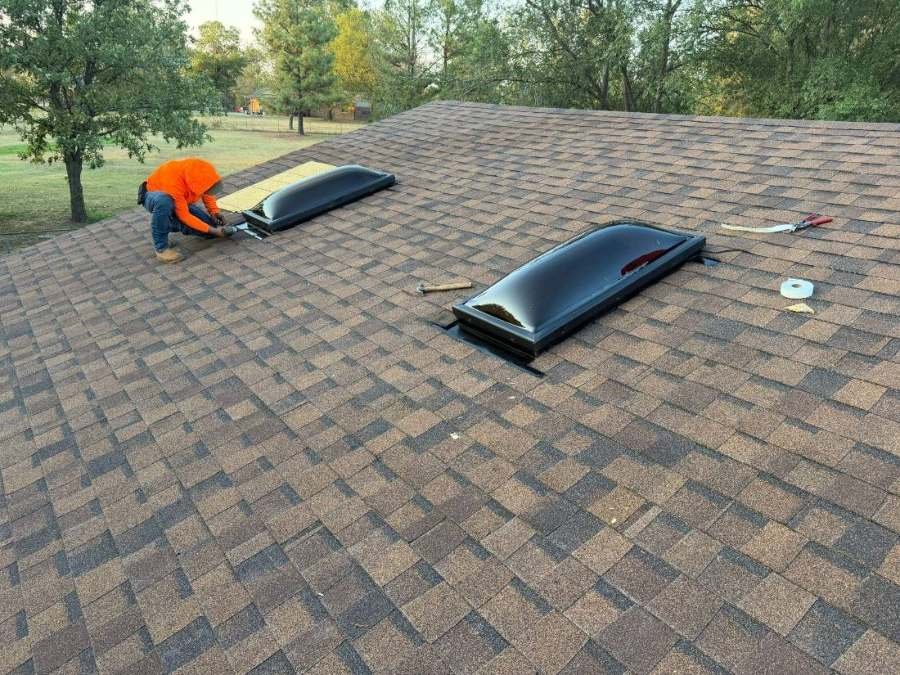
A New Roof Is Not Just New Shingles.
A new roof replacement in Tulsa is a roofing system, not just new shingles. Decking, underlayment, drip edge, flashing, ventilation, shingle type, and every detail that affects how long it lasts. Cut corners on any of those and the Oklahoma storms will find it.
If your roof is aging, missing shingles, leaking after rain, or showing signs of hail damage, we start with an honest inspection. No high-pressure pitch. No scare tactics. No pushing replacement before the roof is actually checked. Just here’s what we found, here’s what it means, and here’s the solution.
Free Roof Inspection
We gather all the facts, present every option we offer, and you choose what’s best for you.
No rush, no pressure.
Request an InspectionCall or Text Any Time
(918) 607-7409After hours? Leave a message. We’re always close to the phone.
Call Now


Let’s Get You A Roof That Lasts
From proper ventilation to better materials and careful installation, we build every roof with one goal in mind: getting it right so it lasts.
Ventilation
If you are not addressing the ventilation issues in your attic, then you can forget about installing impact-resistant shingles. They will dry out and become brittle, so why spend the extra money?
Ventilation is oftentimes overlooked, either by not knowing or not caring. You need a balanced system where cool air enters through the eaves and the same amount of hot air exits through the top of the roof. The most common process to a balanced system is called the 1/300 rule, required by both building codes and manufacturer specifications. If you are not getting the hot air out of the attic, then that attic turns into an oven and literally cooks the shingles.
On every job, we calculate the 1/300 rule and present you with pricing and solutions. This approach is the first process to getting you a roof that lasts.
Inspection
Imagine the installation process. You, the homeowner, were not around and neither was a company representative. Only the crew leader was there, but did they cut corners? If inspection only happens after the job is done, caulking and appearance is all that gets checked. This is the difference that we provide: inspection during the entire process.
We start with an inspection of the property to make sure everything is protected before the work begins. From there we inspect all the decking and don’t leave until it has all been replaced. From there the prep work and final install, making sure nail placement is done properly.
No overdriving the nails through the shingle and no underdriving where the nails are sticking up and the shingles don’t lay flat. Inspection is the key because human nature is to cut corners. Doesn’t mean the workers are bad, but roofing is an extremely tough job.
Inspection during the install and not after is the second factor to getting you a roof that lasts.
Materials
Now that ventilation and inspection are addressed, we can move on to the more interesting subject: materials. In Oklahoma your roof should have at least a Class 3 rated shingle for hail. Class 4 is better but comes at an additional cost. Class 4 is like an investment. Staying in your home a while? Great. Selling in a year or two? The Class 3 shingle is the better choice.
Warranty. Watch out for limited lifetime warranties on shingles. It’s just what it sounds like. If you have a problem, don’t expect much help or payout. A lifetime warranty is what you want. It covers the entire cost of the roof, but you must use the manufacturer’s products, and the roofing company must be certified, like Green Country Roofing is with Atlas and CertainTeed.
Next are upgrades. Would you upgrade to steel pipe jacks compared to the thin aluminum style? Would you install ice and water shield on the eaves? Maybe or maybe not, but the question is were you ever given the option? Every Green Country Roofing estimate includes 3 shingle options and 5 upgrade options. This is not to charge you more but to give you all the options.
Decline everything and go with the standard Class 3 shingle? That’s perfectly fine. What fits your budget is always best. Materials are the third factor to getting you a roof that lasts.
Is It Time To Replace Your Roof?
Not sure if your home needs a roof replacement? Here are a few signs to look for:
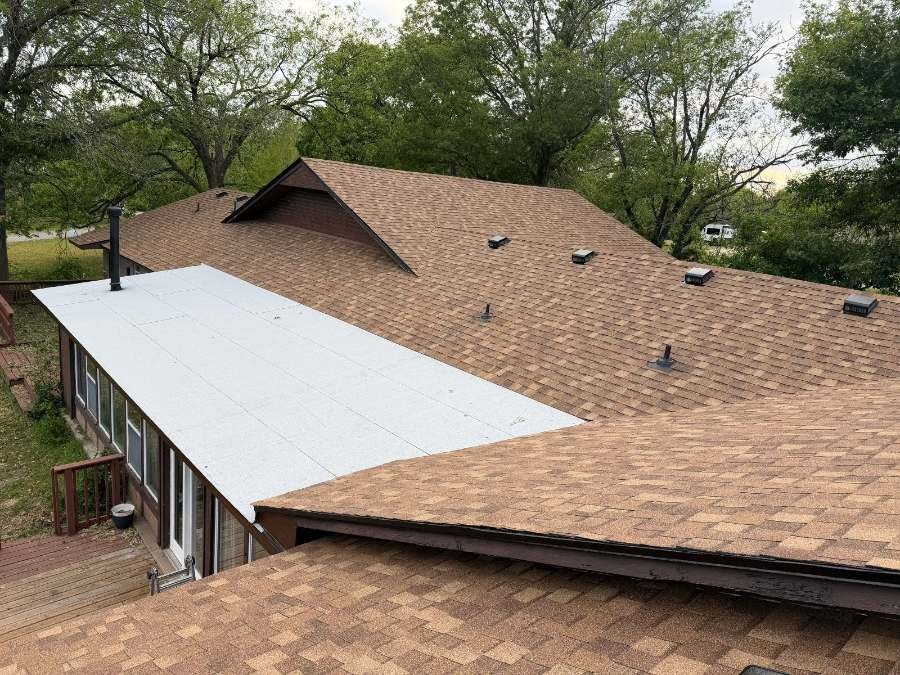
Visible Signs Of Damage
- Shingles won’t stop blowing off your roof
- Granules are exiting through the downspout
- Shingles are cracking and curling
- Visible hail damage on the shingles
Visible Signs Of Aging
- Reuse of flashing that is causing leaks
- Continuous leaking that is costly
- Decking issues that make it hard to find the leak
- Rotten wood in the attic
Roof Is Older Than 12 Years
- Cheap shingles, cheap install
- Under ventilated roofs fail early
- Insurance may only offer an ACV policy
- Will the roof hold up in a storm?
Our Roof Walkthrough Process
Walking through the property, understanding the problems, documenting the issues through photos and videos, picking the proper materials, and inspecting during the install process. That is the Green Country Roofing way.
The Roof Walkthrough
Walk the property with us and point out any issues you’ve noticed. We’ll inspect the roof and attic, document everything with photos and video, and give you the good, the bad, and the ugly, just the facts.
Material Options. Your Choice, Not Ours.
You’ll have three shingle options to choose from: Class 3, Class 4, or Class 4 with a 150 mph wind rating, along with strong non-prorated warranty options. From steel pipe jacks and soffit vents to Atlas shingles, we’ll explain the choices and you decide what makes sense for your roof.
Installation Inspection: The Final Factor
We remove and dispose of all old materials. Nothing gets reused. Your roof is inspected throughout the entire installation, not just after the crew leaves, followed by a thorough cleanup and Rob’s personal final nail check.
What Affects the Cost of a New Roof in Tulsa?
The cost of a new roof in Tulsa can vary widely because every house is different. Roof size, pitch, layers, decking condition, ventilation needs, shingle type, storm damage, code items, access, labor, and project complexity all affect the final estimate.
As a broad educational range, many asphalt shingle roofing systems in Tulsa fall around $12,000 to $18,000. That’s not a guaranteed quote, and some projects fall outside that range. Steeper roofs, more decking, larger square footage, or specialty materials all push it up.
The only reliable way to price a new roof is to inspect, measure and estimate. That estimate will show what’s included, line by line, so you understand the value behind the number. Roofing isn’t just about the shingle, it’s all about the detail work. Shingles just go on top.
Oklahoma Registration and Insurance
#80005519Residential roofing contractors in Oklahoma should maintain proper registration with the Oklahoma Construction Industries Board. Green Country Roofing’s Oklahoma Registration is 80005519.
Residential roofing work in Oklahoma is subject to state registration and insurance requirements. Green Country Roofing carries general liability and workers’ compensation to protect our workers and your home.
Starting July 1, 2026, Oklahoma is introducing a Residential Roofing Endorsement requirement. Contractors will need to pass a state test to install residential roofs. That means fewer storm chasers and more qualified roofers, a real win for homeowners.
Warranty Support and Local Recognition
5-yearGreen Country Roofing provides a 5-year parts and labor warranty on every new roof. Certification includes Atlas PRO+ Gold Select and CertainTeed ShingleMaster.
Through those certifications, homeowners will have access to Atlas Signature Select non-prorated warranty options and CertainTeed SureStart PLUS warranty options. Green Country Roofing is BBB A+ rated and a Nextdoor Neighborhood Fave 2025.




Roof Replacement FAQ
What is a Roof Walkthrough?
A Roof Walkthrough is how we start every job at Green Country Roofing. We walk the entire property with you. You tell us every issue you have ever seen. From there we get on the roof and into the attic. Everything gets documented through photos and videos. We come back down and walk you through exactly what we found: the good, the bad, and the ugly. From there we present all your material options: three shingle choices, warranty options, and a handful of upgrades to accept or decline. Every option is explained clearly so you can make the decision that is right for your home and your budget. No pressure. No sales pitch. Just the facts.
What comes with a new roof?
A new roof includes:
- Removal and disposal of all shingles and felt paper
- Three free sheets of plywood, $70 per sheet after that
- Drip edge
- Synthetic felt paper
- Ice and water shield
- New chimney metal and counter flashing
- Step flashing where needed
- Your choice of shingles installed per manufacturer specifications
- Replacement of old ridge vent or roof vents
- Additional roof vents if needed per the 1/300 rule
- Cleanup with the roller magnet
- Rob’s personal final nail check
- Final walkthrough with Rob, the owner
- 5-year parts and labor warranty
- Manufacturer’s lifetime shingle warranty
How can I extend the life of my roof?
Keep your gutters clean and remove debris like leaves and pine needles from your roof. When water cannot flow freely, problems occur. Make sure your ventilation is properly installed according to the 1/300 rule. If hot air cannot escape the attic it will cook and dry out your shingles before their time. Schedule a Roof Inspection as the roof gets older to determine and fix small issues before they become larger ones. If ventilation was not properly installed when your roof was put on, it can be upgraded within the first few years.
What is the difference between a limited and a lifetime warranty?
This is one of the most important questions a homeowner can ask: is it a limited lifetime warranty or a lifetime warranty? A limited lifetime warranty, if a problem occurs, don’t expect much help or payout. A lifetime warranty is what you want but even those have details worth understanding. Atlas warranties are non-prorated for the first 15 years, meaning if a problem occurs in that window, you get a check for the full amount. After 15 years, it prorates. You can pay extra to extend that non-prorated period to 20 years. CertainTeed does not prorate for the full 50 years. The roof must be installed by an approved contractor using the manufacturer’s products to qualify. Green Country Roofing is an approved contractor with both Atlas and CertainTeed. That matters when it comes time to make a claim.
What does inspection during the install actually mean?
It means we are checking the work while it is happening, not after the crew leaves. The process of inspection during the install is to catch problems before the install has gone on too long. If you catch a problem early, it is cheaper. If you catch a problem after the roof has been installed, it becomes expensive and unlikely that any fix will be completed. It starts with inspecting and protecting your property before and during the tear off process. From there every piece of decking gets inspected and confirmed for replacement. From there the prep work, transition metal, and all of the tiny details before the shingles are installed. Nail placement is the most important factor to inspect. An overdriven nail punches through the shingle and kills the warranty. An underdriven nail leaves the head sticking up and the shingle won’t lay flat. From there the crew does a final cleanup with the roller magnet, followed by Rob’s personal final inspection.
What is the 1/300 rule for ventilation?
The 1/300 rule is the most overlooked factor when installing a new roof. When calculated it provides the exact amount of ventilation needed to properly vent your attic, giving the proper number of square inches needed for intake and exhaust vents. A soffit vent is an intake vent. A roof vent is an exhaust vent. Following the 1/300 rule improves air circulation in your attic, extends the life of your shingles, and validates all manufacturer warranties. We calculate it on every single roof we quote.
How much does a roof cost?
The honest answer is that it depends on several factors: the size of your roof, the pitch, the number of shingle layers, the condition of the decking, the materials you choose, and any building code upgrades needed. As a broad educational range, many asphalt shingle roofing systems in Tulsa fall around $12,000 to $18,000. At Green Country Roofing every estimate includes three shingle options so you can see the price difference between Class 3, Class 4, and Class 4 with a 150-mph wind rating. We also include any upgrade options so you know exactly what you are choosing and what you are declining. For real 2026 pricing with actual examples, check out our blog, How Much Does a Roof Cost in Tulsa.
What are the best shingle options?
Choosing the best shingle depends on your needs and concerns. To guard against wind damage, the Atlas StormMaster Shake has a wind warranty of 150 mph plus a Class 4 rating for hail. If hail is your primary concern, the Atlas Pinnacle Impact is a Class 4 rated shingle with a wind rating of 130 mph. If you want a shingle that is more sun resistant to keep your attic cooler, the Atlas Pinnacle Sun is a great choice. Our best-selling shingle based on performance and pricing is the Atlas Pinnacle Pristine: Class 3 rating for hail and protection from wind speeds up to 130 mph.
What is Atlas’s highest wind-rated shingle?
The Atlas StormMaster Shake with protection against wind speeds up to 150 mph. We install all shingles with 6 nails. It also carries a Class 4 hail rating, making it the strongest combination of wind and hail protection we install.
How long does a roof last?
There are several factors to consider. Was the roof installed properly? Was adequate ventilation installed according to the 1/300 rule? What type of shingle was used? Generally, a roof lasts around 17-19 years in Oklahoma because of our extreme weather. However, if you choose a shingle rated for high winds or hail and have proper ventilation, the life of your roof will be extended well beyond 17-19 years. An under-ventilated roof with cheap shingles can start having issues as early as 12 years old.
Service Areas Around Tulsa
Green Country Roofing is based at 4734 S 179th E Ave, Tulsa, OK 74134, and serves homeowners throughout the Tulsa area. Roofing services are available in Tulsa, Sand Springs, Skiatook, Catoosa, Collinsville, Owasso, Bixby, Broken Arrow, Glenpool, Jenks, Sapulpa, Claremore, Inola, Coweta, Wagoner, and Tulsa County.
Why Local Homeowners Call Green Country Roofing
Homeowners choose Green Country Roofing because they want owner involvement, real life roofing guidance, better materials, and same day communication. Rob the owner stays close to the work, and the team talks like real people instead of reading from a script.
This business is built around doing what it says it will do. That means giving honest roof recommendations, using brand named materials, paying attention to installation detail, and respecting the customer’s property.