
There is nothing like the sound of hail hitting your home. The hail hammering the roof is one sound; the hail hitting the gutters is another. At the same time, it strikes the outdoor grill and the car, and all you’re thinking is, this is crazy. From there you’re like, geez, what in the world do I do now?
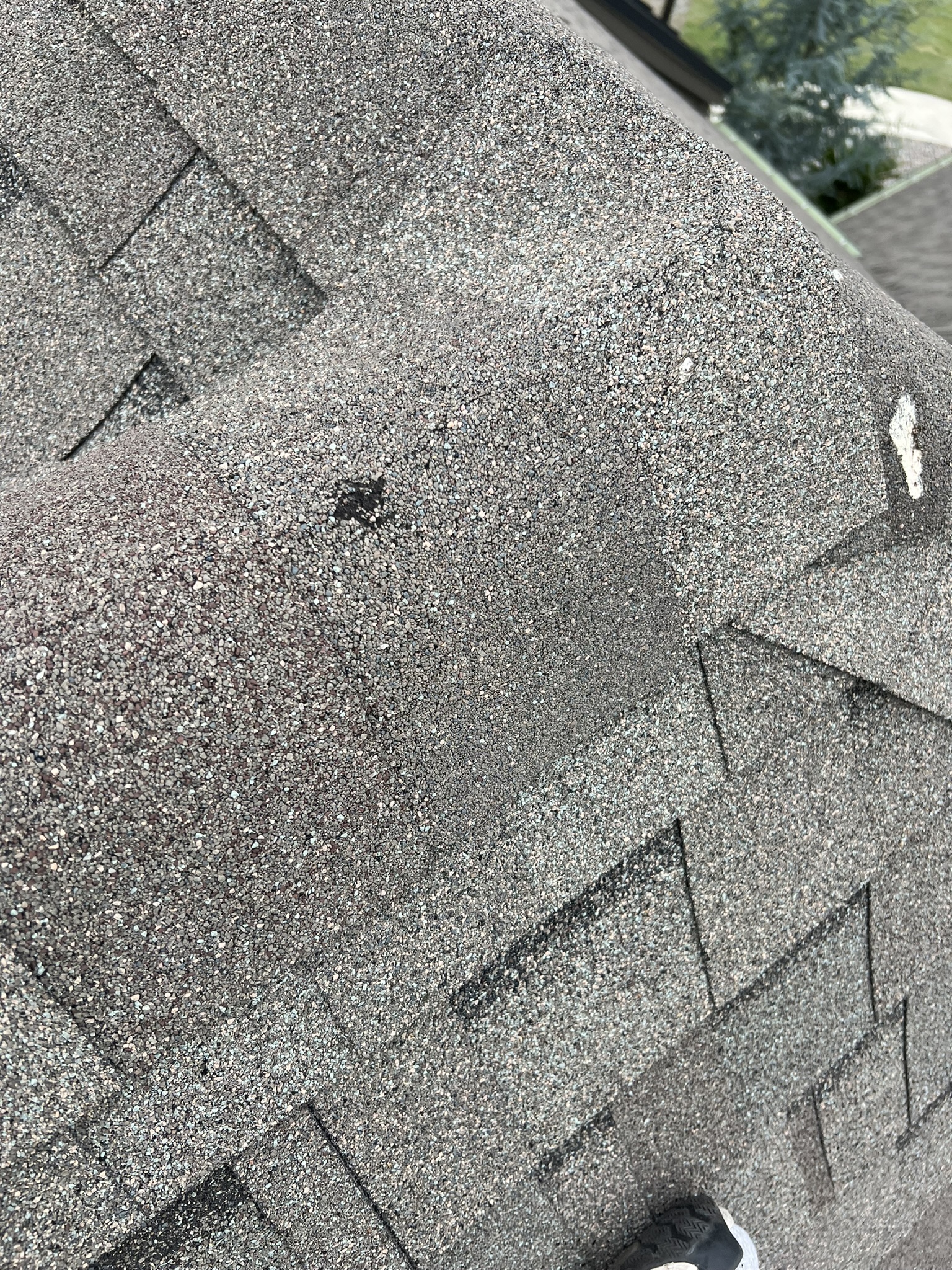
Hail bruising on ridge cap shingles — this is what the adjuster is circling with chalk. Ridge caps take the most direct hits on any roof.
Step 1: Don’t Panic
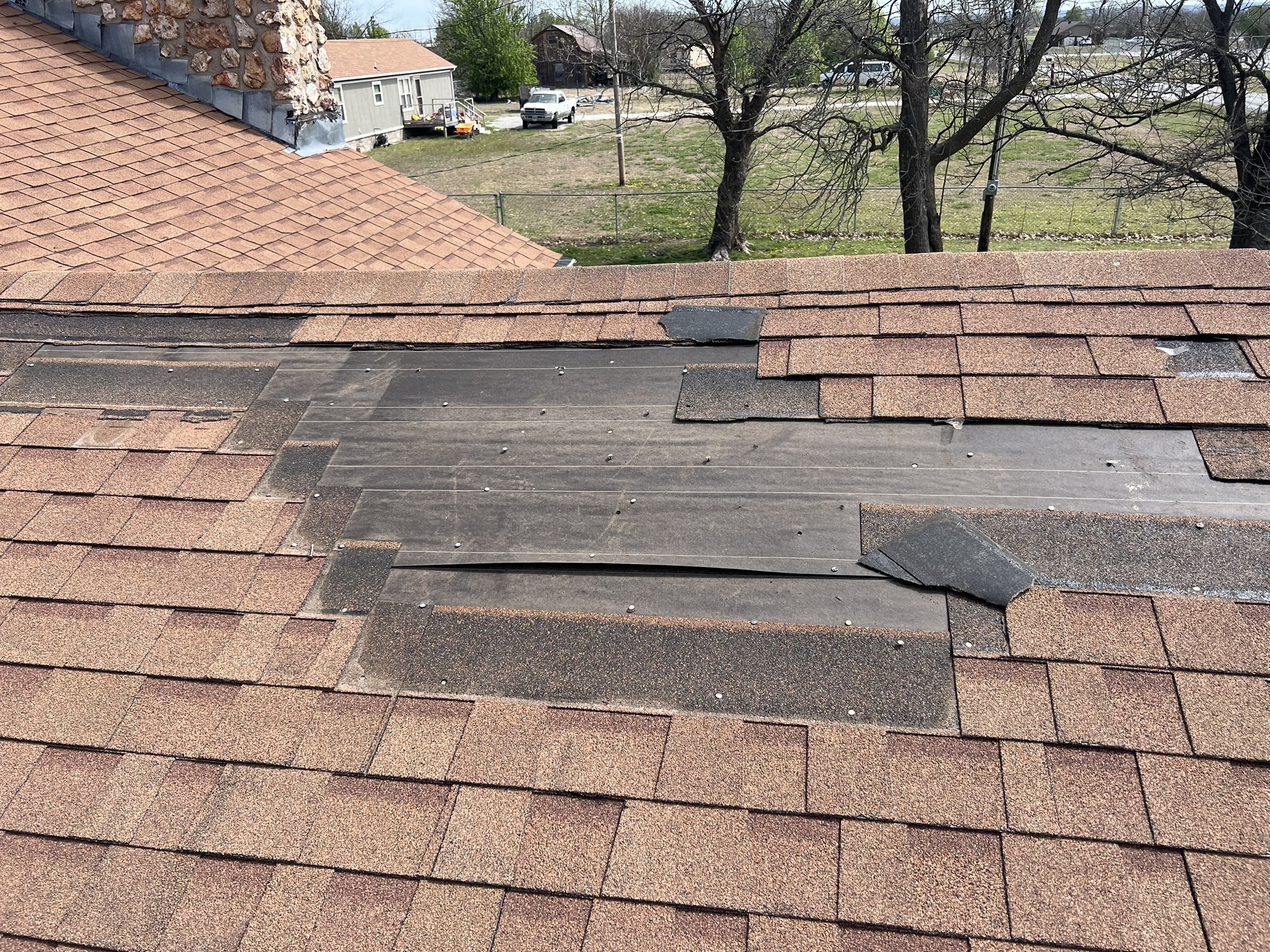
This is what wind damage looks like from the ground. Shingles gone, felt paper exposed — this roof needs attention before the next rain.
In any storm event, the first thing is not to panic and not to do anything crazy. It is beyond easy to make a spur-of-the-moment decision that sounds good at the time, only to find out it was the wrong decision.
Don’t panic, but also don’t be too quick to head outside either. The reason to wait a bit is that sometimes these supercell storms come in back to back, or they form in a way where there is a small break in the action that feels like it’s over but really isn’t. Now if the storm rolls through and it’s completely sunny right after, then that’s one thing. But please turn on the news and double-check the weather report before you step out.
Ok, I do need to make one comment from my experience — I have a tendency to want to go outside and look for the tornado, which is obviously not the smartest move. Maybe I should read my own blog when I’m done and learn something.
Step 2: Check for Leaks Inside
Once you know you are in the clear, or while waiting for that weather report, grab a flashlight and look for leaks throughout the house. Look everywhere — front room, kitchen, all the bedrooms, and that one closet you never go in because stuff just falls out every time you open the door. If you have leaks, then you know you have a roof problem to address. If there are no leaks, it doesn’t mean the roof is fine, just that it’s not a major issue that has to be taken care of ASAP.
Step 3: Survey the Property and Secure It
The third step is to survey the property. There is good reason why, and yes, it is to see what has been damaged, but the bigger issue is that it is your responsibility to secure the property so additional damage doesn’t occur. For example, you checked out the interior and saw no leaks, so you head outside to take a look and you notice something funny with the roof. You have two options — the first is you do nothing and the next time it rains you end up with a big leak. Well, you won’t be happy and neither will your insurance company. The second option is to have a roofing company come out and tarp the roof. You would want to do this with your entire home — secure what you can — tarp a damaged area, cover a broken window, move things away from a leak. If you have windows, siding or fencing damaged, contact a contractor for those areas.
Pro Tip
Document absolutely everything that was damaged — take pictures, make a spreadsheet, or write it all down on a sheet of paper. If there is no documentation, there is a good chance things will not get paid for. And keep every single receipt for any repairs or materials purchased along the way
Step 4: Review Your Insurance Policy
To be honest — looking at your policy only after a storm hits might be okay if you have the right coverage in place. Or it might be a heartbreaker if you don’t.
Here are the most important factors for a hail damage claim:
- RCV or ACV policy. RCV pays for the full roof minus deductible where ACV only covers part of the roof minus the deductible. RCV is what you want.
- Your deductible for hail and wind damage specifically. Common hail and wind deductible is going to be 1% of the home value. 2-5% deductible becomes costly to file a claim.
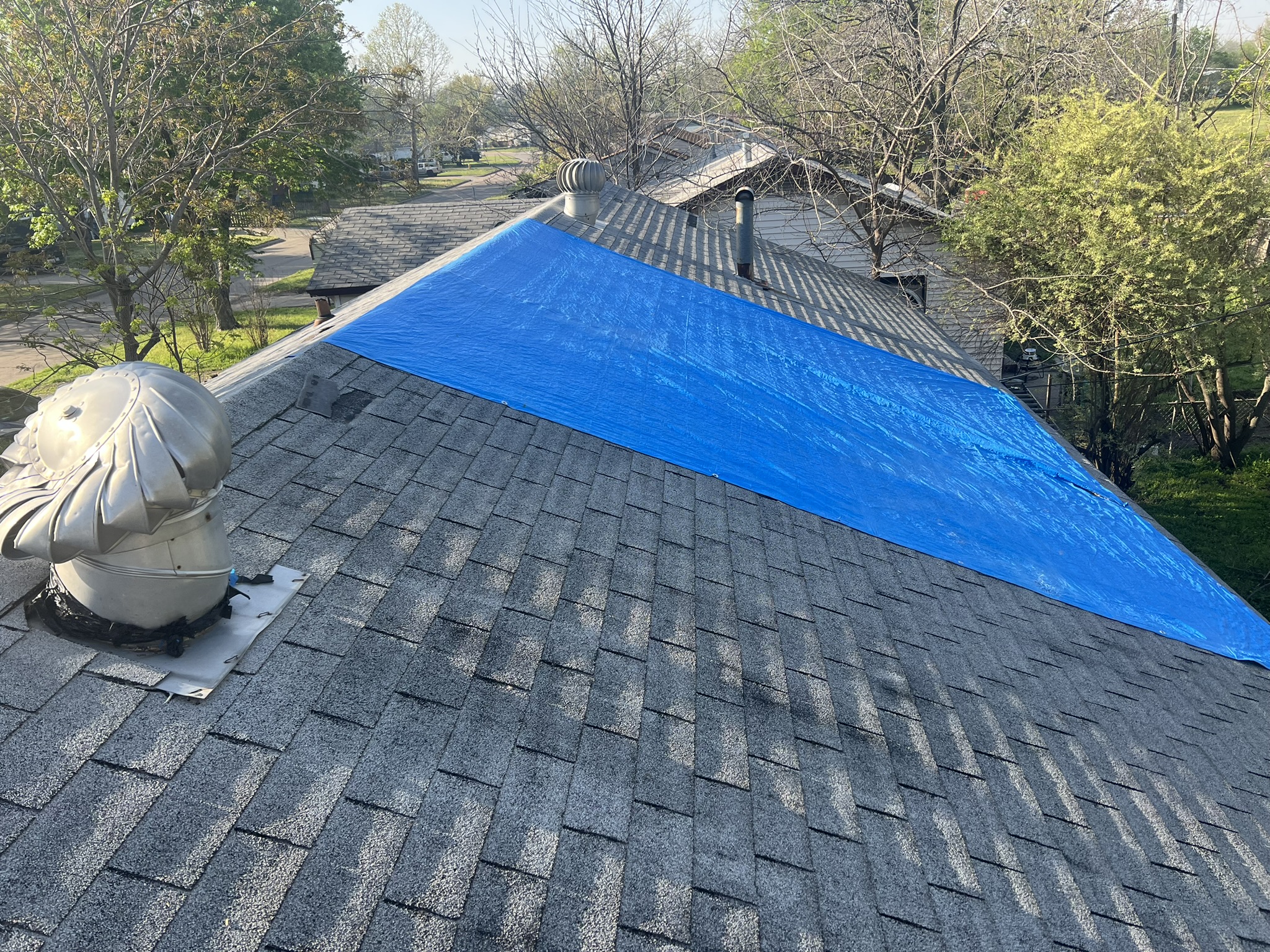
A blue tarp buys you time — but only if it is done right. A proper tarp covers the full damaged section and is secured at the ridge, not just thrown over the peak.
- Building code coverage. If you don’t have it, any code-required upgrades — ventilation, drip edge, decking — come out of your pocket. Some insurance agencies unfortunately might not know what this is.
- Metal marring exclusion. Some policies exclude cosmetic damage to metal surfaces like gutters and metal roofing.
Calling your agent is always the best way to get the facts on your policy. If they’re not available, the declaration page is your next best option. Look for coverage we just discussed and the hail and wind deductible.
The best practice is confirming you have the right coverage before any claim has been filed. We’ve seen homeowners file claims only to find out their policy didn’t provide full coverage. That’s a tough conversation nobody wants to have.
Step 5: Hiring the Right Roofing Contractor
I know what you’re thinking — hiring a contractor is easy because ten of them will be at your door before the end of the day. But not hiring one of those ten might be the hardest thing you do and the best thing.
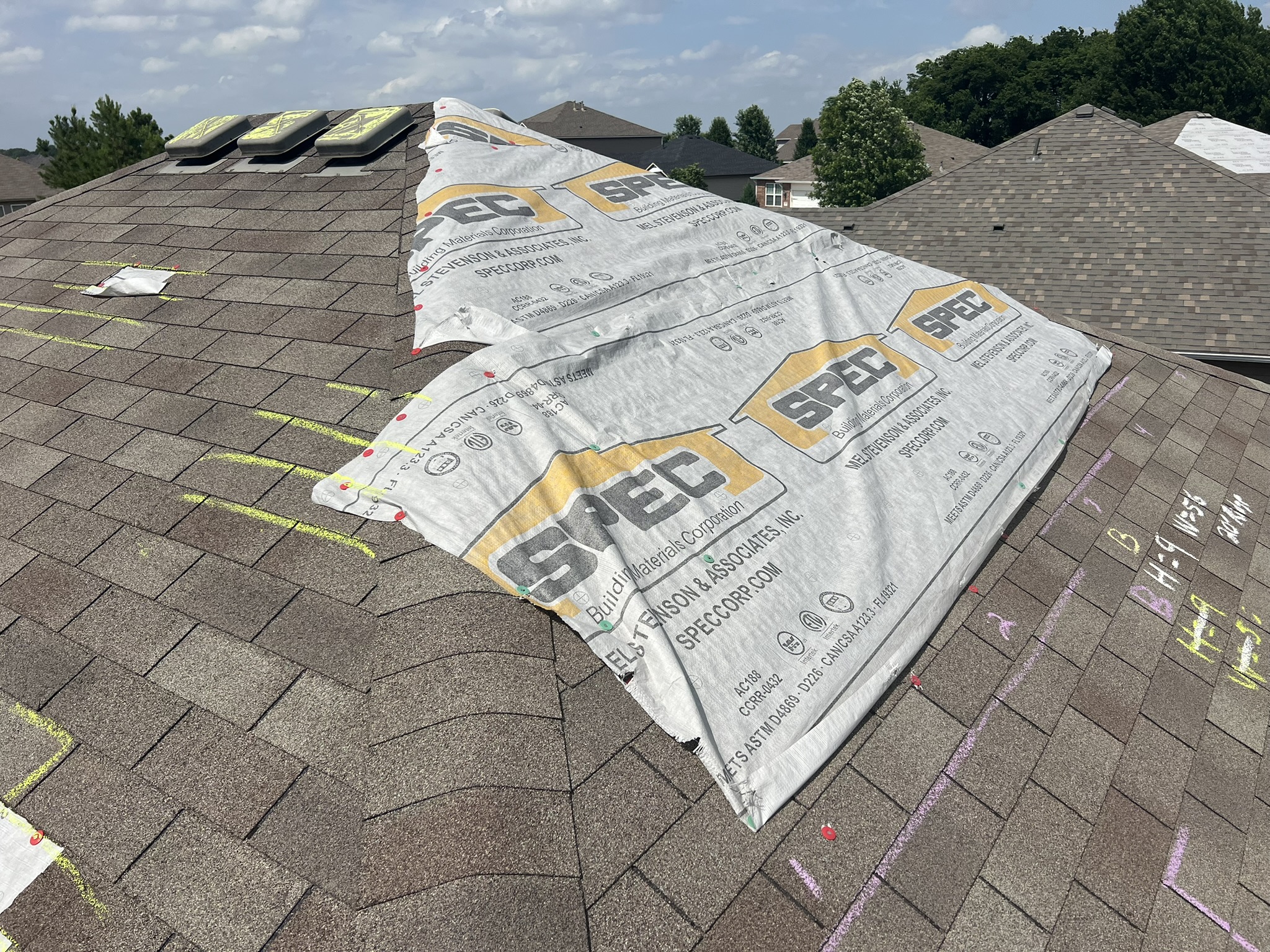
A tarp that was not secured correctly. Every inch of exposed decking is one rainstorm away from interior damage. Do it right the first time.
What most homeowners miss is that everyone knocking on that door is trying to sign up as many people as possible. It becomes all about the numbers — not the customer, not the quality of the work.
So instead of hiring the first guy or the fifth guy who shows up, build a list. Find 5 to 10 contractors — a few from the internet, a few from the door — and start tracking their behavior. Did they have pushy salespeople? Did they return your call the same day? Did they show up when they said they would? Over time you start crossing people off until you’re down to 2 or 3. Then you make your decision.
While you are making that list, here are a few quick points.
- Don’t sign anything until you know 100 percent what’s in the contract. Canceling after you sign could cost you up to 20 percent of your claim.
- Check their Oklahoma registration at verifyroofing.cib.ok.gov. If they’re not on it, move on.
- Pushy salespeople are a sign it’s all about the numbers. A good contractor explains your options and lets you decide.
- Any company offering to pay your deductible is cutting corners somewhere. They’re making less money on the job –and something must give.
Not all roofing companies are equal. I always say — if the insurance company is paying for the roof, you don’t have to go the cheap route.
I was already working with a customer when a hailstorm hit the Sand Springs area. Several days after the storm, the roofing companies were out working in the neighborhood. I was entering the neighborhood and, I’m serious, there were tons of roofing signs at the entrance of the sub. Soon after I headed out from the customer’s house to get supplies and when I came back, all the yard signs had been pulled out except one. That one roofing company — I won’t say who — they pulled all the other signs up and planted their own. I couldn’t believe it.
Final Thoughts
We talked about being smart and patient through this process. For sure, having your property damaged by hail is rough and learning the insurance process can be a lot of work, but hiring the wrong company just complicates the entire process. At Green Country Roofing, we understand that restoring your home is important to you. Contact us at 918-607-7409.