

Oklahoma averages 10–15 hailstorms a year — and if you’re on this page, you’re probably wondering if impact-resistant shingles are actually worth the extra cost. We recently had a customer whose cars were totaled after a storm, but their roof—outfitted with impact-resistant shingles–came through without a scratch. That said, impact-resistant shingles only work as advertised when they’re installed correctly. Get it wrong, and you’ve wasted your money.
What Are Impact-Resistant Shingles?
Impact-resistant shingles are engineered to absorb and deflect hail impact without cracking or losing granules — typically through a reinforced fiberglass base, a specially formulated asphalt blend, or both. While the name suggests they can resist hail, it’s important to understand that impact-resistant does not mean hail-proof.
Class 3 vs. Class 4 Ratings
Impact-resistant shingles come in two rating levels: Class 3 and Class 4. Both ratings are determined by a standardized test that involves dropping a solid steel ball onto the shingle from 20 feet in the air. If the shingle doesn’t crack or break, it earns its impact-resistant rating.
The difference between the two comes down to the size of the steel ball. A Class 3 rating uses a 1¾-inch steel ball, while a Class 4 rating uses a larger 2-inch steel ball. That extra quarter inch translates to meaningfully better protection in a real hailstorm.
How Do I Find Impact-Resistant Shingles?
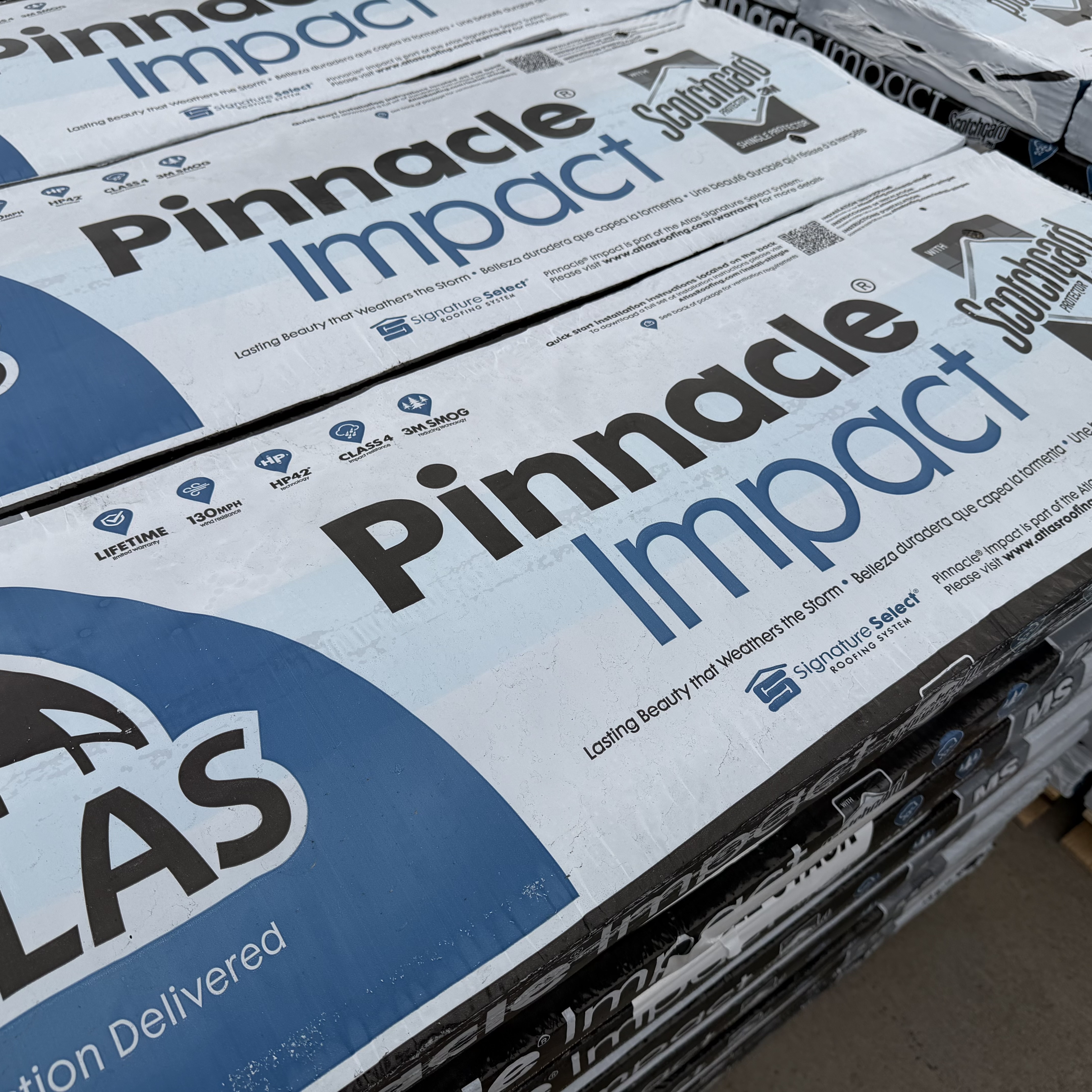
Each major shingle manufacturer offers both Class 3 and Class 4 options. We currently install Atlas and CertainTeed, but why we prefer those brands is a topic for another blog. For now, here’s a quick look at what each major manufacturer offers so you know what to ask for:
| MANUFACTURER | CLASS 3 | CLASS 4 |
| Atlas | Pinnacle Pristine | Pinnacle Impact |
| CertainTeed | Landmark | Landmark IR |
| Owens Corning | Duration | Duration Flex |
| TAMKO | Titan | StormFighter Flex |
| GAF | Timberline HDZ | Timberline UHDZ |
As you can see, every major manufacturer has a Class 4 option — so the real decision isn’t which brand; it’s whether the upgrade is worth it for your specific situation. That’s where it gets interesting. When in doubt, ask your contractor which Class 4 option they recommend for your budget and roof size — not all Class 4 shingles are priced the same.
Are Impact-Resistant Shingles Worth It?
Class 3 hail-rated shingles have become nearly the standard in 2026. The real question is whether upgrading to Class 4 is worth the extra cost. Here are some factors to help you decide:
- How long do you plan to live in your home? If you’re planning to move in the next 3–5 years, the upgrade to Class 4 may not pay for itself. But if you’re staying long-term, the investment is well worth it.
- What insurance discount are you getting? Compare the discount your insurer offers for Class 3 versus Class 4. For example, if you get a $150 discount for Class 3 but $300 for Class 4, the Class 4 upgrade will pay for itself over time. However, if there is no extra discount for a Class 4, that might affect your decision. Call your insurance company and specifically ask what discount you’d receive for a Class 3 versus a Class 4 rated shingle — a lot of homeowners don’t realize that’s even a question they can ask.
- How often does your area get hail? If you’re only seeing hail once every 15 years, the urgency is lower. But if your area gets hit every 5 years or so, upgrading to Class 4 is a no-brainer.
- Peace of mind. If a decent-sized hailstorm rolls through and your Class 4 shingles hold up without needing to file a claim, that peace of mind alone can be worth the upgrade cost.
A note on pricing: Typically, upgrading from a Class 3 to a Class 4 shingle adds $500–$2,500 to your total roof cost, depending on roof size and the manufacturer you choose. One brand’s Class 4 shingle may cost quite a bit more than another’s, but a higher price doesn’t necessarily mean a better product.
When Is the Upgrade NOT Worth It?
There are situations where upgrading to Class 4 shingles won’t give you the return you’re expecting:
- You’re not upgrading the ventilation system. Shingles perform their best when they’re still pliable. If your attic ventilation isn’t working properly, the trapped heat literally cooks the shingles, drying them out and making them brittle. Once that happens, they can’t hold up against hail, and granule loss becomes a real problem.
- You’re not upgrading roof vents and pipe jacks to steel. What’s the point of upgrading the shingles if every vent and pipe jack around them dents on the first hailstorm because they’re still aluminum? Upgrading your vents and pipe jacks to steel versions ensures everything on the roof can handle the same level of impact.
- You’re not replacing all the flashing. To me, this is the most important one. If the pipe flashing, chimney flashing, and step flashing aren’t all replaced, you’re setting yourself up for leaks 5–8 years down the road. Why upgrade the shingles if the flashing is going to be the weak link?

Quick Guide: Is the Upgrade Worth It for You?
Here’s a simple way to figure out if the upgrade makes financial sense. Look at four numbers:
Insurance savings — the annual discount difference between Class 3 and Class 4.
Upgrade costs — the Class 4 shingle premium plus the cost to properly upgrade ventilation, flashing, and vents to steel.
Your hail deductible — how much you’d pay out-of-pocket if you had to file a claim.
Your timeline — how many years you plan to stay in the home.
If your insurance savings over your timeline plus your avoided deductible outweigh the upgrade costs, the math works in your favor.
Real-World Examples: What Does the Upgrade Actually Cost?
To give you a better idea of what this looks like in real numbers, here are two examples based on actual roof sizes. Keep in mind, the cost per square shown below is the additional cost to upgrade from a Class 3 to a Class 4 shingle — not the total cost of the roof itself.
Example 1 — Full Upgrade Needed
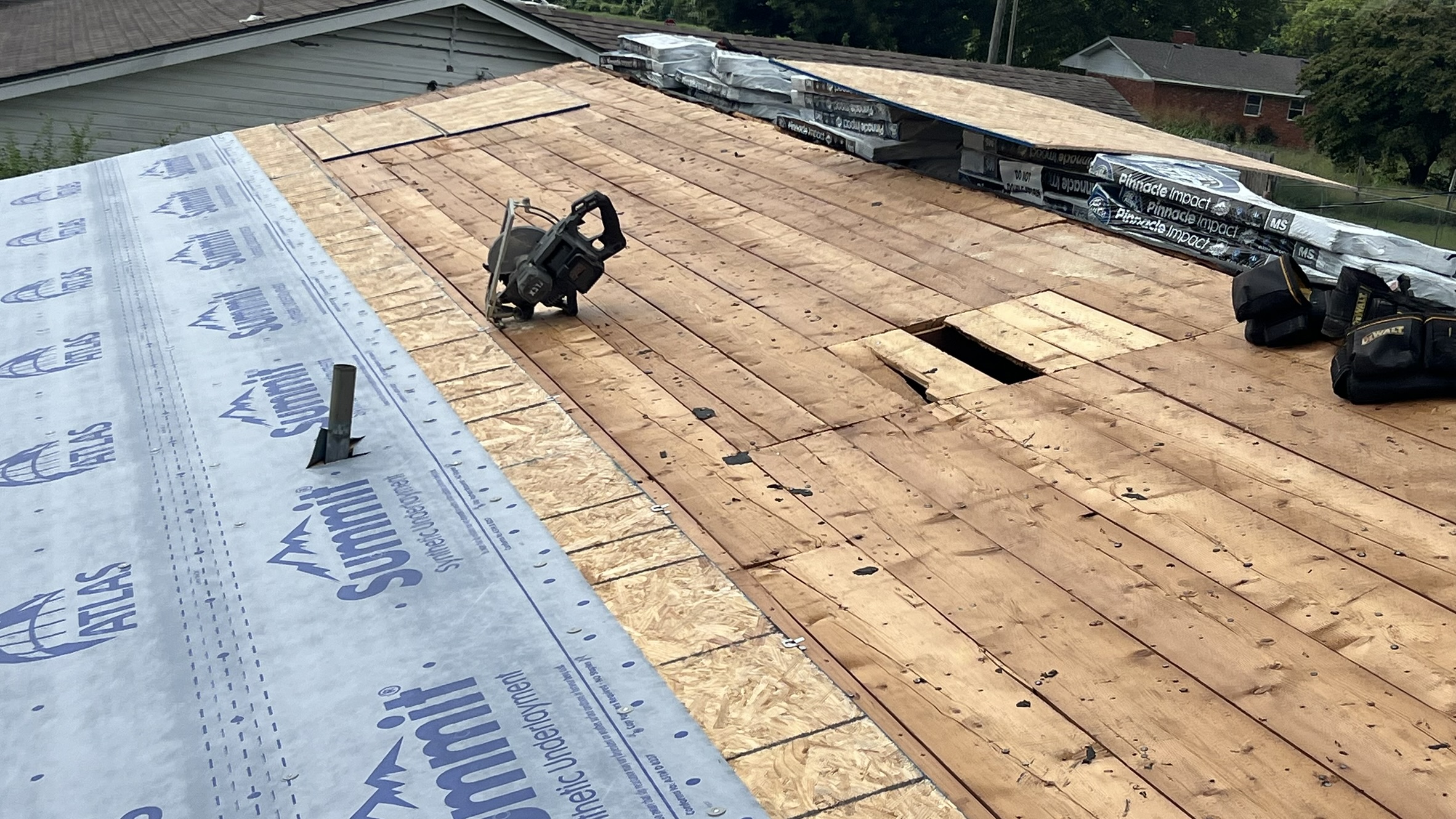
This homeowner has a 40-square roof, needs ventilation upgrades, and wants lifetime pipe jacks. Shingle: Atlas Pinnacle Impact (Class 4).
| ITEM | CALCULATION | COST |
| Class 4 shingle upgrade (40 squares) | 40 × $25 | $1,000 |
| Lifetime pipe jacks (5) | 5 × $94 | $470 |
| Roof vents (10) | 10 × $50 | $500 |
| Soffit vents (14) | 14 × $60 | $840 |
| Total Upgrade Cost | $2,810 |
Example 2 — Minimal Upgrade Needed
This homeowner has a 35-square roof. The roof vents are already included in the standard roof cost, and they already have soffit vents — so the only extras are the shingle upgrade and 3 lifetime pipe jacks.
| ITEM | CALCULATION | COST |
| Class 4 shingle upgrade (35 squares) | 35 × $25 | $875 |
| Lifetime pipe jacks (3) | 3 × $94 | $282 |
| Total Upgrade Cost | $1,157 |
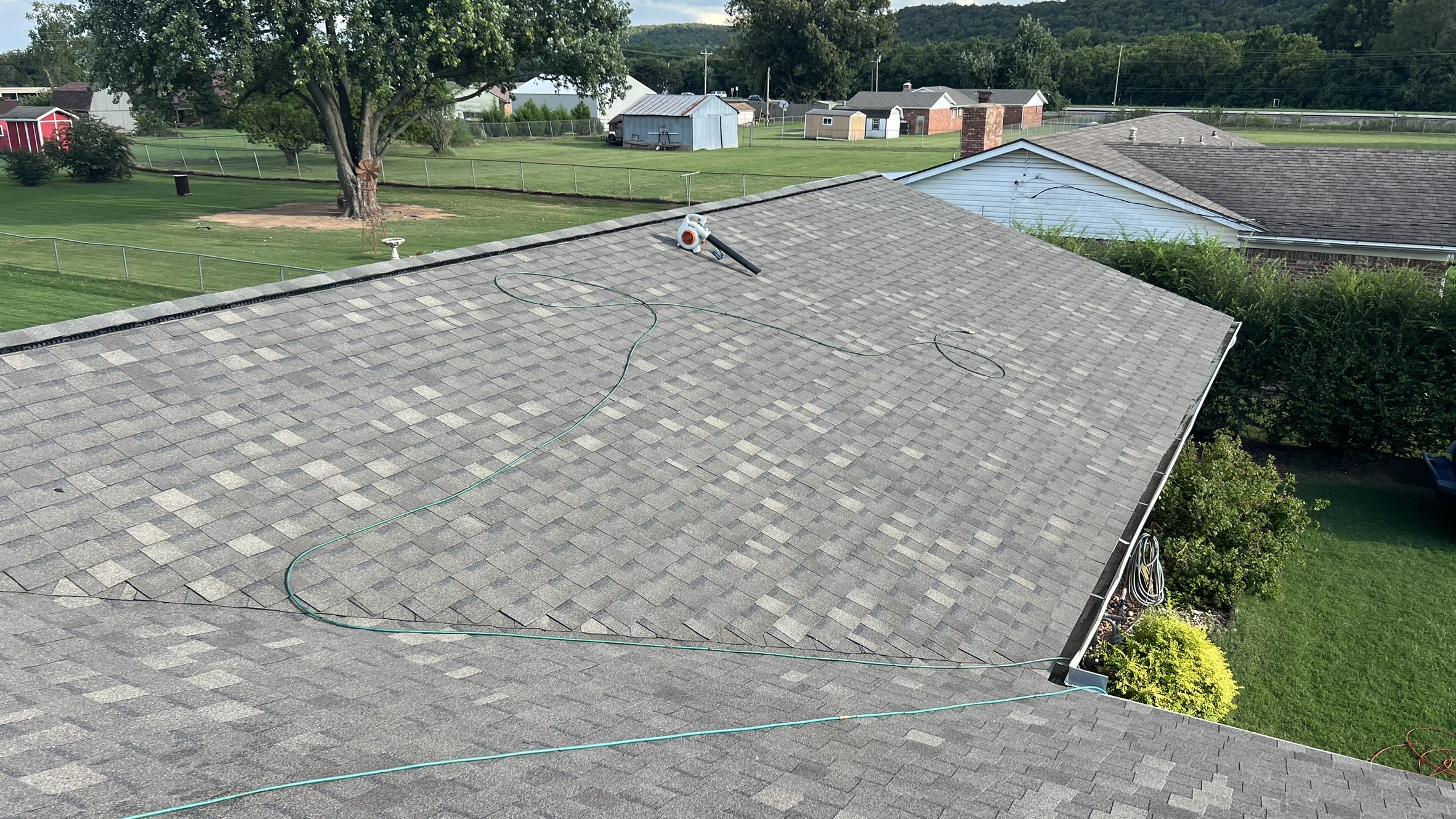
As you can see, the upgrade cost can range quite a bit depending on your roof size and what other components need attention. That’s why it’s important to get a real assessment of your specific roof before deciding.
Not Sure Where to Start?
If you’re not sure whether your ventilation needs upgrading or what the Class 4 shingle will cost, don’t wait until the hailstorm hits — give us a call at Green Country Roofing: (918) 992-4665. We’ll get up in the attic, assess everything, and give you the full cost breakdown for a properly installed Class 4 impact-resistant shingle system so you can make the right decision with real numbers in front of you.