
One of two scenarios is likely happening for you to be reading this blog. The first is you are doing research on a new roof — maybe what products you want to install, or whether the money is even worth spending.
Or your roof is only 10 years old and has degraded severely. Shingles are blowing off or half of your granules are washing out of the downspout every time it rains. You’re like “what in the world” — or you can be saying things that are not so nice. Haha.
From what it seems, roofs in Oklahoma are lasting an average of 15 to 19 years.
Why is that the case? Shingles have a warranty system rated up to 50 years. So why are they failing at 15–19 years or sooner?
Here are the reasons why.
- Oklahoma Weather — 51-degree swings in a single week, hail, tornadoes, and straight-line winds.
- Under-Ventilated Roof — Most Tulsa roofs running at 25% of proper ventilation, cooking shingles from below.
- Installation — Speed over accuracy. Shingles nailed without concern for placement.
- Proper Materials — Shingles installed without hail ratings in one of the most active hail corridors in the country.
- Installation Timing — Dirt and debris blocking sealant on new construction roofs before shingles can bond.
Want The Juicy Details? Let’s Get Into It.
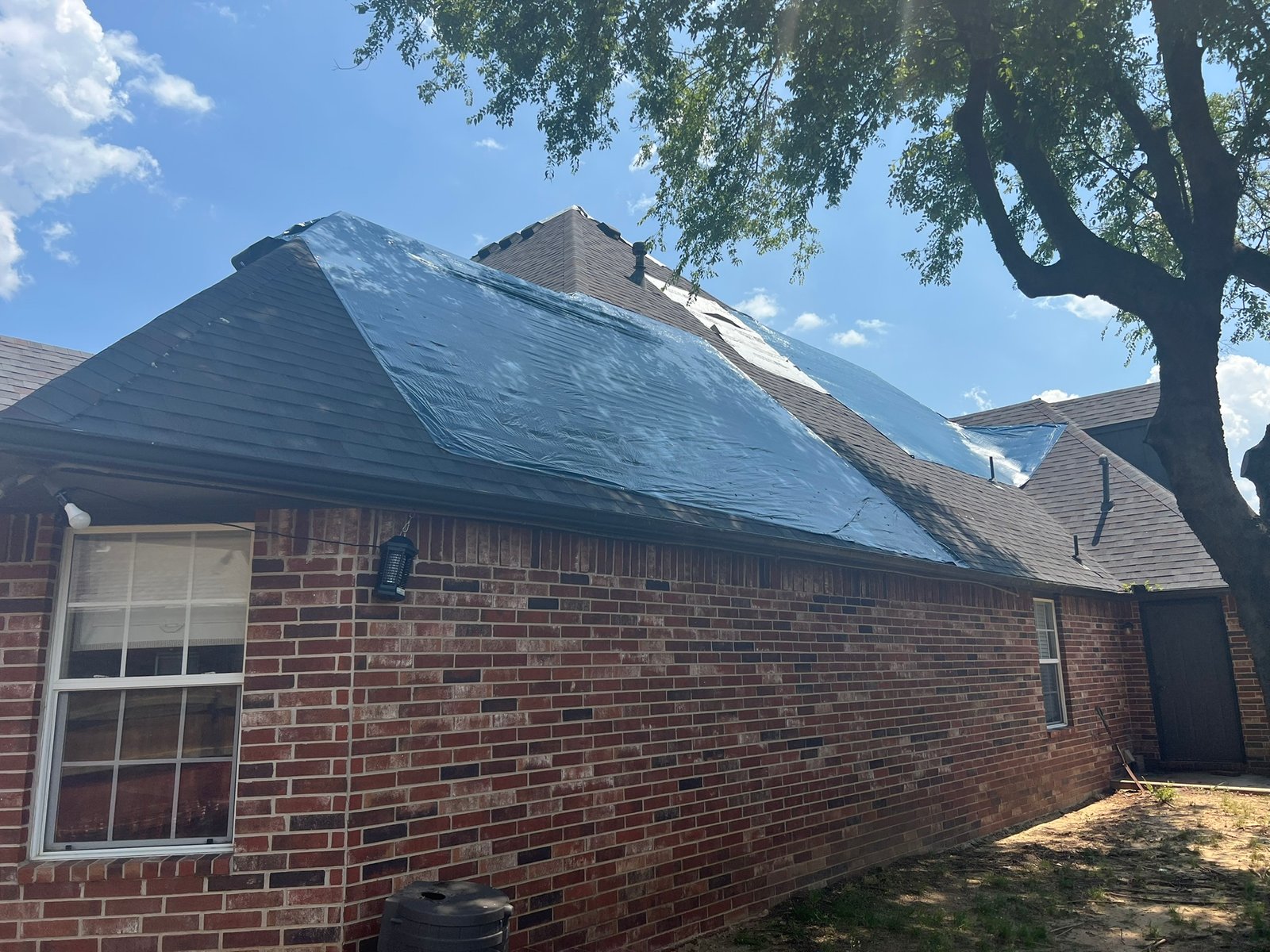
A blue tarp never lies. This is what happens when weather wins and a roof wasn’t built to hold up against Oklahoma’s extremes.
Oklahoma Weather
Honestly, I never look past the 4-day forecast because that’s how fast Oklahoma weather changes. The week I’m writing this, the high on Monday is 40 degrees and the projected high on Saturday is 91 degrees. Really?
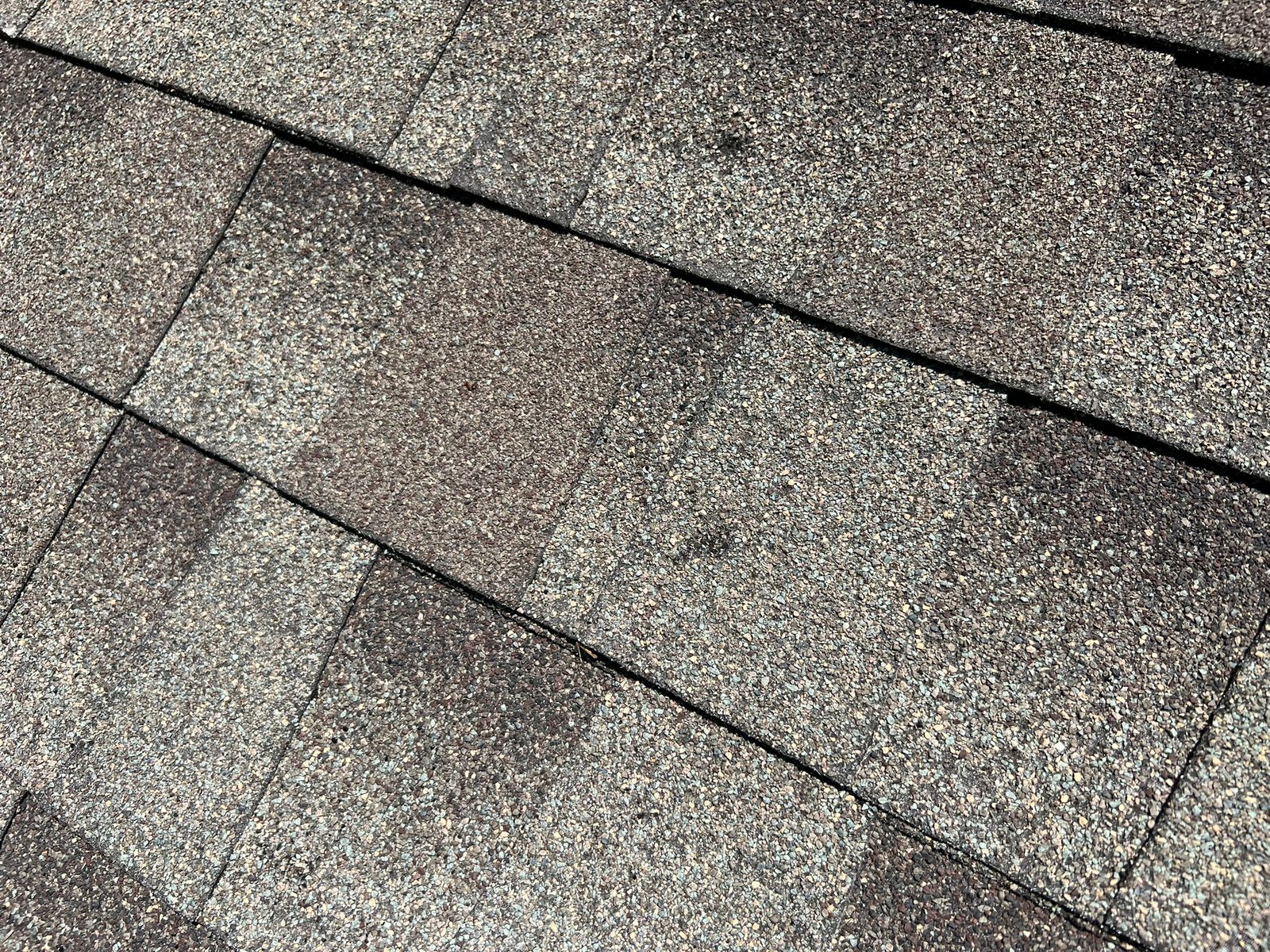
Granule loss across multiple tabs — this is ventilation damage. The attic heat is cooking the shingles from underneath, shortening their life by years.
Shingles become flexible and soft when they warm up and hard and brittle when they get cold. That constant change causes them to expand and contract, creating wear over time. I always compare things to Michigan where I was raised. In Michigan it’s more common to get 30 years out of a roof. The weather isn’t as severe: the temperature swings aren’t as dramatic; the winters are cold but steady; the fall and spring are close to 70s; and a heat wave means 90s for a week. In Oklahoma it’s in the 90s by 10 a.m. Haha. Shingles unfortunately live a tough life in this part of the country. Proper installation and ventilation are key to extending the life — but weather is the main factor for why roofs don’t last that long in Tulsa.
Under-Ventilated Roof
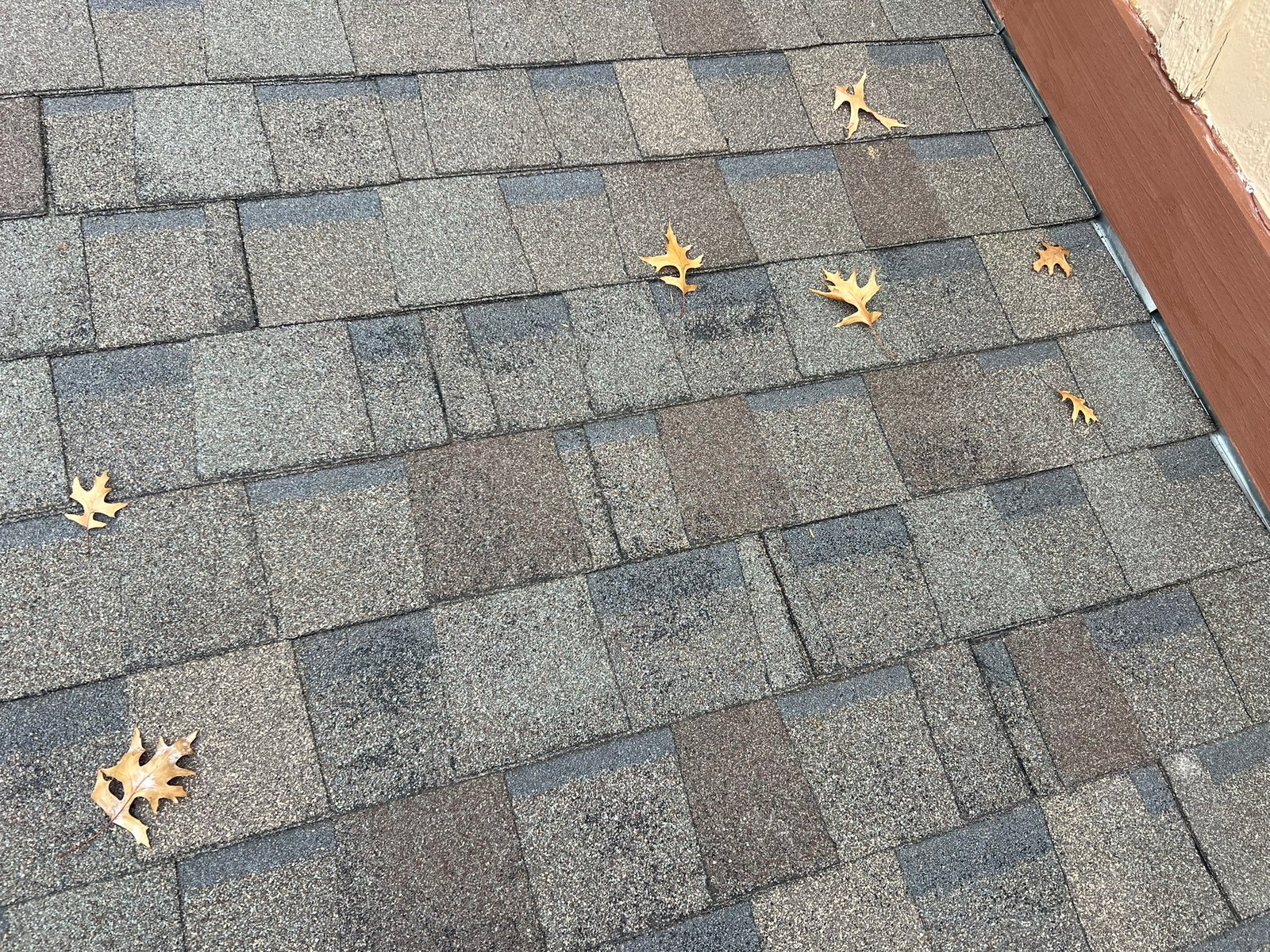
Color bleed, granule loss, and debris collecting in the valleys. Every one of these signs points to a roof that won’t make it much longer.
The ventilation conversation is starting to pick up some steam here in Tulsa, but we’ve been addressing these issues since 2017. It’s amazing — to this day we show up for an inspection, and the roof only has 4 to 6 vents and absolutely no soffit vents. Really, it’s no wonder the roof is failing.
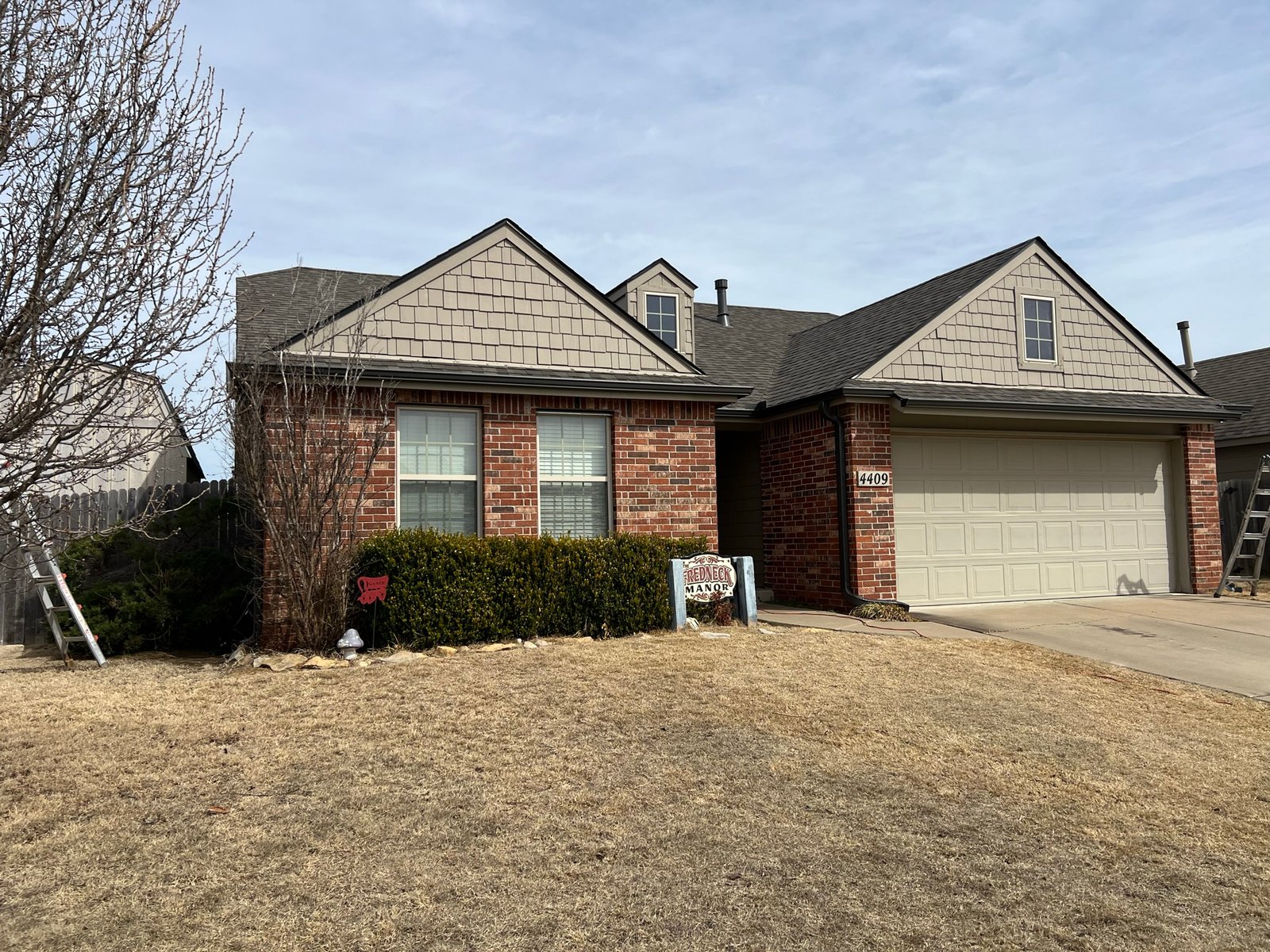
A properly installed roof on a Tulsa brick home — right materials, right ventilation, right install. This one should last 25 years or more.
Quick explanation. Under the overhangs is called the soffit area — this is where cool air enters the attic. From there, the hot air exhausts out through the roof. Without soffit vents, there’s no cool air entering. No air movement. Hot air is trapped. Cooling costs rise and shingles get cooked because the heat is never fully removed from the attic.
Think of it this way — brand new shingles are soft, flexible, and bendable. The granules are secured to the surface. But once they become dry and brittle from constant heat, all that flexibility is gone, and the granules can no longer stay attached. They just fall off, and that is why they are coming out of the downspout.
Addressing this is as simple as following the 1/300 ventilation rule per code. This rule will tell you the number of square inches of exhaust vents and intake vents needed to vent your home. Everyone who hears the numbers is shocked. But it is in the Oklahoma code book. Look for another blog on this topic specifically. Following this rule will extend the life of your roof.
Installation
Tearing that roof off and installing the new one even faster — that’s the name of the game for some crews…just like Quick Draw McGraw in the wild west of Oklahoma, or something like that. I’m originally from Michigan.
This is where training and oversight are a must. I’m not saying this to sell you anything — trust me. But when my guys are shingling at a roof, I will literally look over their shoulders to check their nailing. When I started doing this, they’d get a little nervous and make mistakes. Now they couldn’t care less — they know the process and they’re comfortable with it. But no oversight equals “who really knows” — until 10 years from now when the roof starts failing.
Better oversight means better quality — and that roof will last longer.
Proper Materials
There is nothing wrong with getting a roof that fits your budget. Getting a better installation costs nothing extra. But would you spend an extra $200–$400 — depending on your roof size — to move up from a shingle with no hail rating to one with at least a Class 3 rating? Maybe you would. The question is — do you even know all the options available to get a better roof, or even a slightly better roof?
In Tulsa the storms have intensified quite a bit over the last few years. I used to say, “oh just wait for one more good storm to file a claim.” I no longer say that. I’ve seen the destruction some of these storms have done to homes. The question now is — How do you prevent something bad from happening?
Looking at better material options to help withstand Tulsa storms is one of the best decisions you can make — but only if you also address the ventilation. There’s no point installing Class 4 shingles over an attic that’s cooking it from the inside. Don’t expect it to last longer than any other shingles.
Installation Timing
Installing a roof where the shingles can seal properly within a week or two is key. This is the problem with most new construction jobs. Homes are built year-round, but during the colder months, shingles don’t seal instantly — it can take weeks or even months. Then all the dirt swirling around the job site attaches to the sealant strips on the shingles, preventing them from ever bonding properly. Shingles start blowing off starting around year 12. How do I know? I live in a new construction subdivision in Tulsa. Each time the wind blows it’s easy to find work.
Installing roofs in weather below 45 to 50 degrees is a no-go unless you have a leaky roof with tarps on it and it’s a true emergency. Otherwise, wait a week or two — or even three days. Haha. The weather will change.
“Roofs just don’t last long in Oklahoma” is an easy excuse to say about a roof failing — but now you have the knowledge to try to make your next one last a little longer.
Honestly, there are a minimum number of contractors talking about any of this. I’m not sure how many are writing blogs about it either. But there is nothing more important than what we just covered. If you find yourself in a situation where it’s hard to get the facts or your options, we get it. Or if it feels like pulling teeth just to get your questions answered — give us a call. Shoot, I don’t even mind just talking. Green Country Roofing at 918-607-7409.